
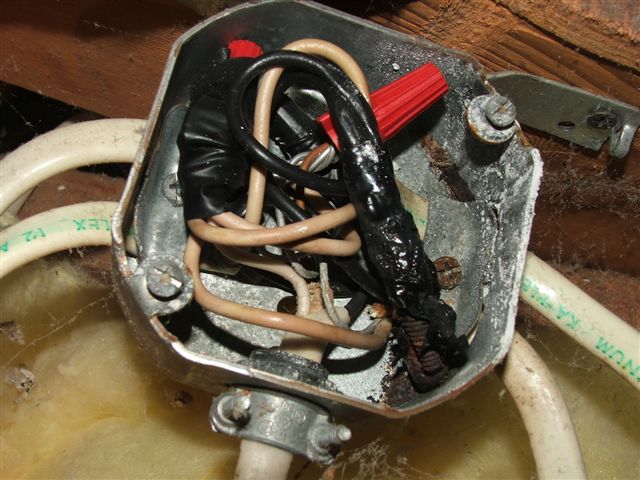
Figure 1 - Fire in electrical box with aluminum and copper wires
Figures 1 and 3 are courtesy of Charles Buell Inspections, Inc.
Aluminum expands and contracts substantially differently than brass, copper and steel. Hence, when aluminum wire is placed under screws that are made of these materials the connection can become loose over a period of time due to the thermal expansion and contraction of the materials.
With very few exceptions metals oxidize to some extent, the problem is that aluminum oxide, which is formed on the outside of the aluminum when it is contact with air is an insulator rather than a conductor. This means that over a period of time when one or more aluminum wires are connected to one another or to a copper wire the aluminum oxide will negate the connection.
It wouldn't be so bad if that is all that happened, the connection was lost. As the aluminum oxide begins to accumulate on the outside of the aluminum wire, the connection begins to heat-up as electricity tries to flow through the wires as shown in Figure 1. The result can be a fire.
If you are replacing switches or receptacles ensure that they are identified with CO/ALR, this is the current rating for the connection of either copper or aluminum wires.
If you are joining two or more aluminum wire together you must use connectors that have been made to meet the requirement. These include Marrette numbers 63 and 65 and Ideal Twister number 065, Figure 2. These connectors are filled with a special compound which prevents the aluminum from oxidizing and corrosion created from galvanic reaction of the mating of two dissimilar metal materials.
Always follow the manufacturer's specifications with respect to the number and size of conductors that can be mated using their connectors.
If you have aluminum wiring in your home and are performing renovations that require added circuits, or expansion of current circuits, the best solution is to run new circuits directly from the main distribution panel, rather than tapping into a current circuit that uses aluminum wires.
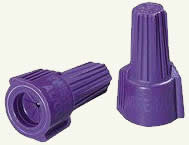
Figure 2 - Ideal Industries #065 Aluminum To Copper Connector
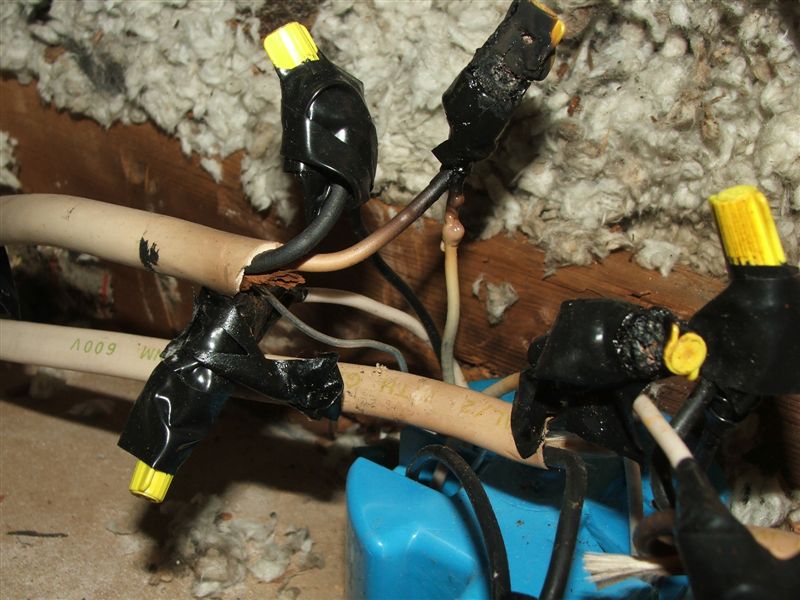
Figure 3 - fire caused by incorrect connection of aluminum and copper wires
If you haven't had problems with your aluminum wiring, then it is likely, after this length of time, that you won't. However, if you start to open connections or try to join copper wire to extend or modify circuit layouts and patterns you may be opening up a Pandora's box of problems. With aluminum wiring it is best to let sleeping dogs lie.
In Figure 3, copper has been joined to aluminum using standard copper wire nuts and the insulation has burned.
Secondarily, whether joining aluminum to copper or copper to copper all joints should be made in an electrical box with a cover plate, so that if there is a fire it is contained within the electrical box.
Burning down your home because you saved the cost of an electrical box and cover makes little if any sense what so ever.
I do not believe in ripping the walls apart in a home to remove aluminum wiring that has been working for the past 30 years. On the same basis I don't believe in ripping walls apart to remove knob and tube wiring that has been working for 75 years.
That being said, if you are doing a total kitchen or bathroom remodel, and the majority of the wall covering, be it plaster or drywall has been removed, then replacing the accessible aluminum wire circuits with copper circuits is a sound investment. The added cost of some copper wire, a few electrical boxes, a couple of circuit breakers and new receptacles is very small compared to the total kitchen remodel costs.
A similar situation exists if you are finishing a basement or an attic. It makes more sense to run a new circuit or circuits in copper, to the attic or basement area then to tap into or join up with current aluminum wiring.
If you must work with the aluminum wiring there are a couple of things to remember.
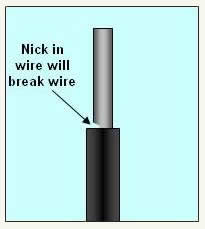
Figure 4 - Nicking wire when stripping
Do not nick the wire when stripping, Figure 4. Although you shouldn't nick copper wire when stripping it, copper is much more forgiving than aluminum wire is. Any nick in the wire will cause the wire to break and in many cases the break will occur as you are trying to replace the switch or the receptacle in the electrical box.
Nicking wire is a common occurrence when the wrong tool is used to strip the covering off the conductor. Side cutters, knife blades and razor blades are not designed to remove the covering from aluminum or copper wires and in most cases using any of the aforementioned tools will leave the wire conductor with a nick in it. A proper wire stripper should always be used.
Because the gauge of aluminum wire is one size higher than for copper wire (a 12 gauge aluminum wire is needed for 15 amps, whereas a 14 gauge copper wire is needed for 15 amps), it is harder to bend the wires back into the electrical box, especially if it is a shallow box or a box that has a lot of additional wires in it, when replacing a switch or receptacle.