
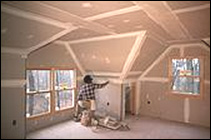
Figure 1 - Taped drywall
The compound used to cover drywall joints creates a very fine and highly abrasive dust when dry and then sanded.
Have you ever seen a professional drywall taper using a power sander? I doubt it. If you use a power sander to level drywall compound, the dust will definitely find its way into the motor windings and bearings and you can write the power tool off in a matter of minutes.
Not using power tools to sand drywall compound may seem obvious, but there are other motors in your home that can also be affected by the drywall compound dust.
If you have a central air furnace or air conditioning system the dust will be sucked into the return air vents and although a lot of the dust will get trapped in the filter, a portion will make it through the filter to the fan motor and the bearings, on any pulleys that may be within the system. Other motors or bearings that can be easily affected are located in bathroom and kitchen exhaust fans. In fact if you have any motors within the home including ceiling fans, they should be covered so that the fine drywall dust will not infiltrate them and destroy the bearings.
In the case of central air conditioning systems the dust will land on the coils and be washed down into the condensation drain lines where it will solidify and eventually block the free flow of the condensate water.
Window air conditioners will draw the dust through the exhaust portion of the unit and clog filters and damage motors and bearings.
Using a home vacuum rather than an industrial vac to clean up the drywall compound dust will most likely damage any of the moving parts and the motor.
If drywall compound dust lands on fine furniture or hardwood floors, you must be extremely cautious in the methods that you use to clean up as the dust as it will leave scratch marks on lacquer and polyurethane finishes.
The same situation applies to products made from acrylics such as bathtubs and bathtub and shower enclosures.
Last, but by no means least, you should always wear a dust mask and
goggles when sanding drywall compound as exposure to drywall dust will get into your nose cavities and lungs.