
One of the most frustrating things that can happen after a remodel that involves the installation of new drywall or in a new home are nail pops in the drywall (Figure 1). Nail pops are nail heads that appear, apparently for no reason, after all the filling and painting has been completed.
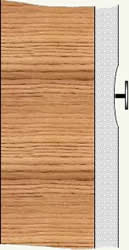
Figure 1 - Nail pop in drywall
Nail pops are not uncommon and are generally the a result of a few factors either independent of one another or a combination. All of the causes are based on a gap between the wall stud and the drywall, as shown in Figure 2.
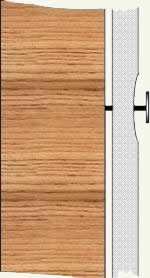
Figure 2 - Gap between drywall and wall stud can create a nail pop.
- The lumber, studs, that the drywall is nailed to has moisture within it, as the lumber dries it shrinks and this shrinking is not uniform on all boards or even throughout any individual board. When the board shrinks an air gap occurs between the drywall and the stud and if something or someone applies some pressure against the wall, it will close the gap and the nail head will appear!
- If the drywall is not pushed tightly against the studs or roof rafters, when the nails are driven in, a gap could be left between the structural member and the drywall. Again applying some force to the drywall will make the nail head appear.
- Gaps between the drywall and studs or roof joists can also occur if the contractor skimped on the number of nails, when doing the installation. It is not that nails cost a lot, but the labor to install them does. If an installer uses 20% less nails they have saved 20% of the time required to nail the drywall in place. On a single home this can equate to man days of saved labor. One reason to always be suspicious of a very low bid.
The use of steel studs avoids nail pops completely. For two reasons. Steel studs do not shrink or warp and drywall on steel studs must be installed with screws.
Of course the easiest way to avoid nail pops is to install drywall or any other sheet product with screws (Figure 3) rather than nails. Screws will pull the drywall hard up against any structural member.
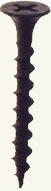
Figure 3 - Drywall screw
Repairing nail pops is not a difficult project.
- Drive the nail in, so that it has dimpled the drywall.
It is best if someone is pushing on the drywall to force it up against the stud, as you reset the nail.
For the best repair, after driving the nail back into position, drive in a screw (make sure it leaves a small dimple in the drywall) approximately 3 inches above or below the nail that has popped.
You may discover that as you reseat the drywall against the stud, that additional nail pops occur, this is not an uncommon occurrence.
Make sure that all the nails pops have been taken care of before you start working with the joint compound or spackle and paint.
- Cover with some joint compound or spackle.
- Lightly sand (when dry)
- Paint with a primer or undercoat and then apply a finished coat.
If you have a lot of nail pops you may wish to consider reseating the entire piece of drywall by adding a number of screws. Push the flat of your hand against the drywall and see if the sheet moves in and out.