

In order to choose the correct paintbrush there are three items to consider.
- The type of paint – oil or water base.
- The surface texture being painted – rough or smooth.
- The size of the area.
You can purchase paintbrushes in a variety of sizes, starting at ½ inch to 6 inch in ½” increments (Figure 1).
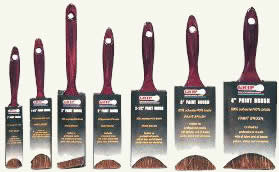
Figure 1 - Paintbrush set
Most painting projects require 2 brushes. A smaller brush for trim and edges and a large brush for quick surface covering. In general, you should choose the largest brush suitable for the surface you are painting. The larger the brush, the more paint it will carry from the paint can to the surface, hence you avoid wasted trips and the potential of more times when paint can drip onto unwanted surfaces.
Paints are manufactured using two different bases – water and oil. A water-based paint will be identified by one or more of these words or statements on the can – latex, acrylic, waterborne, or water-based. An oil-based paint will contain one or more of these words or statements – oil, alkyd, solvent-borne or oil-based.
Use a synthetic brush made of nylon and/or polyester for water-based paints (Figure 2). Synthetic brushes are also recommended for rough surface textures. As well, synthetic brushes hold up better when painting in a humid environment and they are easier to clean then natural bristle. Synthetic brushes can be used for oil-based paints, however if you want that “professional” job, you should use a natural bristle brush (Figure 3) with oil-based paints. Natural bristle brushes have the softest tips and hence produce the smoothest finish.
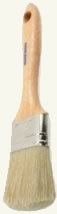
Figure 2 - Synthetic bristle paint brush for water based paints
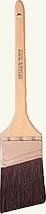
Figure 3 - Natural bristle paint brush for oil based paints
You should not use natural bristle brushes with water-based paints because the natural bristle absorbs water, hence you will convert your brush to a mop.
As well, a rough textured surface will wear down a natural bristle brush faster than a synthetic bristle. As a general statement, natural bristle brushes will hold more paint than a synthetic bristle brush.
With either paint or brush types, long smooth strokes produce a better finish than short strokes.
Selection of paint brushes.