
Repairing a crack in a concrete wall, as shown in Figure 1, providing they are non-structural, is not a difficult project and most home handymen should be more than able to accomplish the repairs. However, you must prepare the surface properly and use the correct patching compounds or the repair will not hold and you will be redoing it again in less than a year.
Non-structural cracking is not uncommon and more than 90% of all concrete cracks are non-structural. If however, you have structural cracking you may want to consider talking to a professional.
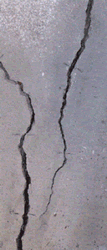
Figure 1 - Cracks in concrete wall
No matter what product you use the crack must be prepared to accept the filler. The process involves removing all loose surface material, making the crack into an inverted "V" and cleaning the crack of dirt, dust and grime.
Figure 2 shows a cross section of the crack. Figure 3 shows a cross section of the same crack incorrectly chiseled out and Figure 4 shows the same crack correctly chiseled out.

Figure 2 - Crack in concrete wall

Figure 3 - "V" chiseled in wrong direction

Figure 4 - "V" chiseled in correct direction
- Using a concrete chisel (Figure 5) create an inverted "V" the full length of the crack. The inverted "V" prevents any pressure from the outside of the crack pushing the filler out.
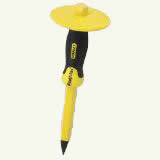
Figure 5 - Concrete chisel
- Use a wire brush to clean away any loose material. Do not wire brush the inside of the "V" or the crack to a point where you have created a smooth surface, as all fillers will work better if the surface that they are to adhere to have a rough texture.
- Use water and/or high pressure air to wash out any dirt, dust or grime from inside the crack area. Dirt, dust and grime will prevent the filler from adhering to the concrete wall.
- Follow the manufacturer's instructions for mixing and inserting the filler.
Caulk will not repair a crack in a concrete wall and only provides an aesthetic repair.
Hydraulic Cement is the product that will be sold by most of the big box home improvement stores, primarily because they do not know any better. The problem with hydraulic cement is that it does not adhere well to concrete and has absolutely no flexibility. The wall cracked due to movement, it expands in the summer and shrinks in the winter. The life of a repair made with hydraulic cement will be a couple of years at best.
Expandable Polyurethane is an excellent choice for non-structural concrete crack repair up to 1/2 inch wide. There are four reasons that this product works so well.
- Expandable polyurethane does not get hard or rigid, hence as the building moves with the changes of the seasons the product moves as well.
- It can be used on hairline cracks.
- It will adhere to wet or dry concrete and can be used even while water is leaking through the wall.
- It's expansion characteristics allow it to penetrate cracks that are more than 20 inches deep and fill hollows even if they are on the backside of the wall. This means that the complete crack is filled rather than just creating a surface repair. Water on the outside of the wall will not find any method of entry.