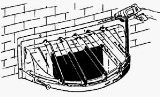
Common Areas of Water Seepage:
Mortar Joints
Window Wells
Over The Top Of Foundation Wall
Cracks In Foundation Wall
Tie Rod
Pipe Penetration
Porous Concrete
Cove Joint
Floor Drain
Crack In Concrete Floor
Before you can decide on what remediation projects are necessary to correct the water seepage problem you must first determine where the water is actually entering your basement and the root cause.
In an unfinished basement determining where the water is entering is usually not a problem as you can see the water stains on the floors and walls. Where the basement is finished, determining the cause of the water can mean removing wall sheathing and insulation.
Water Seepage Through Mortar Joints - Figures 1 & 2

Figure 1 - Water seepage through mortar joints
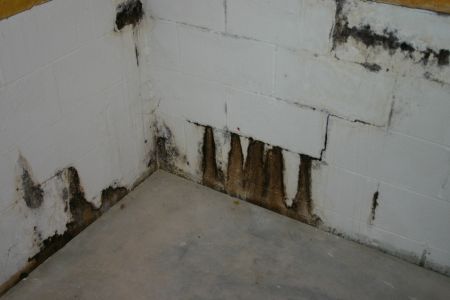
Figure 2 - Water seepage through block wall
Concrete block, clay brick or stone uses mortar as the adhesive to hold them in place. Without the mortar the wall would have no strength at all. Mortar is a mixture of Portland cement and sand. Mortar is not a forever material, in other words, over an undefined period of time the mortar will deteriorate and its porosity will increase allowing water to penetrate the seams.
If the water seepage problem in your basement is a result of deterioration of the mortar it can be repaired from the outside of the home by excavating an area beside the basement structure and applying a membrane to the foundation walls.
Water Seepage Through A Window Well - Figures 3 & 4
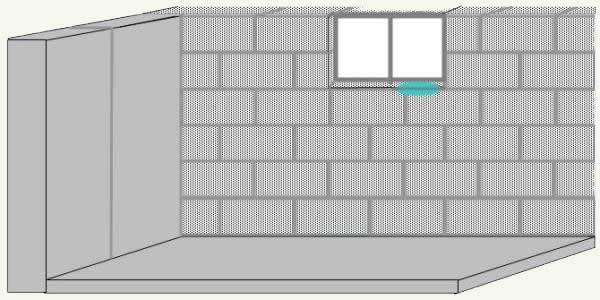
Figure 3 - Water seepage through window well
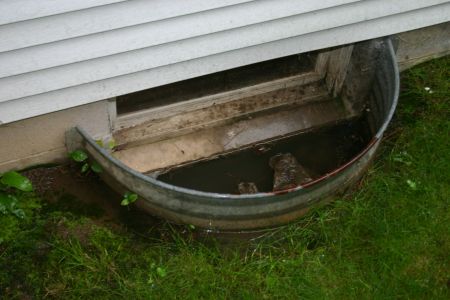
Figure 4 - Standing water in window well
Window wells are notorious for creating water seepage problems into the basement of a home. Excess water accumulates in the well and with no where else to go the water drips down the basement walls. This situation can be exacerbated during periods of heavy rain or snow melt, especially if the grading of the property does not provide a convenient runoff area away from the home.
There are various methods used to alleviate window well seepage. In many cases a combination of fixes are used. These methods include adding or clearing drains that should be at the bottom of every window well, adding an awning or cover structure, as shown in Figure 5, over the window well to direct rain water and snow away from the window well, grading the property to provide for adequate drainage and/or adding French drains.