logo

Caulking Chart

Caulking Chart

A quick guide to choosing the correct caulking for specific applications. Replacing old and worn caulking is a home improvement project that almost any diy home handyman can complete successfully.

Additional information on choosing & using caulking


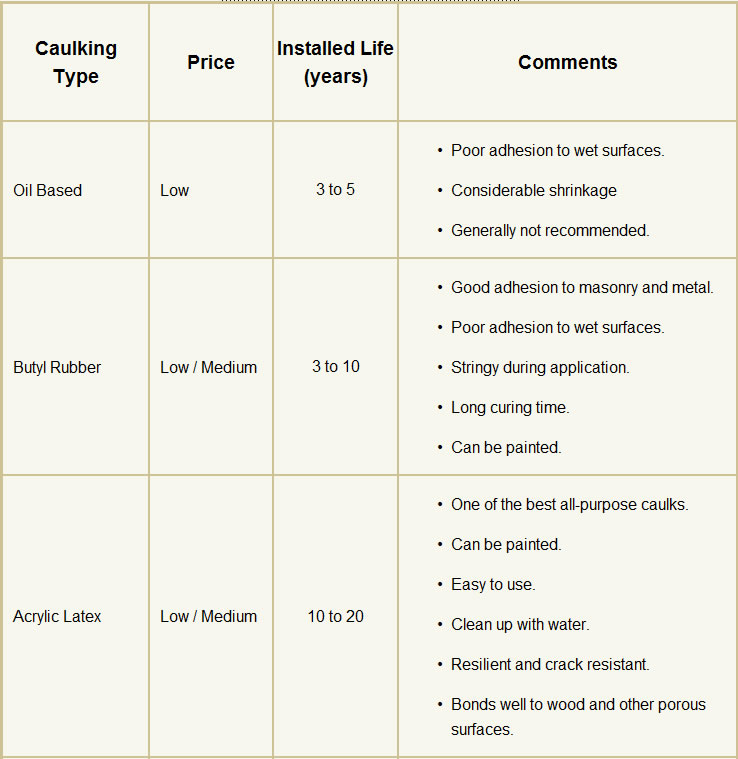
TYPE

Price

Installed Life (years)

Comments

Oil Based

Low

3 to 5

  • Poor adhesion to wet surfaces.

  • Considerable shrinkage

  • Generally not recommended.

Butyl Rubber

Low / Medium

3 to 10

  • Good adhesion to masonry and metal.

  • Poor adhesion to wet surfaces.

  • Stringy during application.

  • Long curing time.

  • Can be painted.

Acrylic Latex

Low / Medium

10 to 20

  • One of the best all-purpose caulks.

  • Can be painted.

  • Easy to use.

  • Clean up with water.

  • Resilient and crack resistant.

  • Bonds well to wood and other porous surfaces.

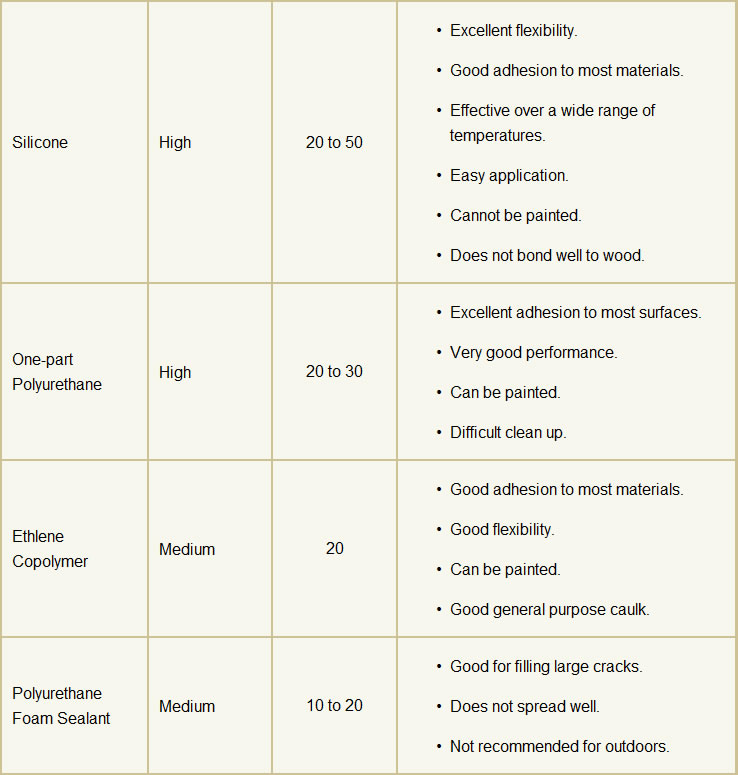
Silicone

High

20 to 50

  • Excellent flexibility.

  • Good adhesion to most materials.

  • Effective over a wide range of temperatures.

  • Easy application.

  • Cannot be painted.

  • Does not bond well to wood.

One-part Polyurethane

High

20 to 30

  • Excellent adhesion to most surfaces.

  • Very good performance.

  • Can be painted.

  • Difficult clean up.

Ethlene Copolymer

Medium

20

  • Good adhesion to most materials.

  • Good flexibility.

  • Can be painted.

  • Good general purpose caulk.

Polyurethane Foam Sealant

Medium

10 to 20

  • Good for filling large cracks.

  • Does not spread well.

  • Not recommended for outdoors.

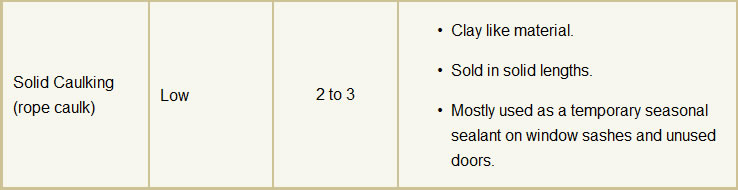
Solid Caulking (rope caulk)

Low

2 to 3

  • Clay like material.

  • Sold in solid lengths.

  • Mostly used as a temporary seasonal sealant on window sashes and unused doors.

Share |