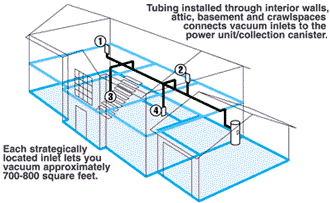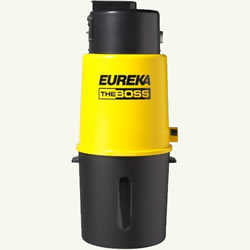
Figure 1 - Central vacuum system
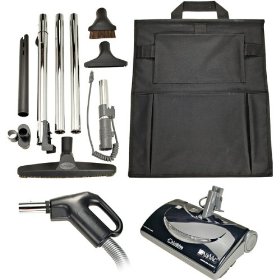
Figure 2 - Central vac accessories
Installing a central vac system is a home improvement project that can be undertaken by the majority of diy home handymen.
The power/canister unit is usually mounted in a garage or basement.
Most handymen can install a central vacuum system, without the need for professional assistance. The most complex part of the installation is physically running the two inch plastic piping from the power unit to the inlets.
There are many reasons to consider the installation of a central vacuum system for your home:
- Relieves Allergy Symptoms:
- More Power:
- Larger Canister:
- Convenience:
- Quiet:
As the power unit and canister are mounted outside of the living area of the home, exhaust air from the vacuum is not circulated back into the room being vacuumed which substantially improves the air quality in the room. Coupled with good filtration, many manufacturers are using HEPA filtration, almost 100% of the contacted dirt, dust mites, pollen, dander, and other allergens are removed and contained.
Central vacuum systems deliver up to five times more suction power than conventional upright or canister vacuum cleaners. More suction equates to better cleaning.
The canister that is attached to the power unit holds as much as six gallons of dirt, 10 times more dirt than conventional upright or canister vacuum cleaners. You can vacuum longer without the inconvenience of changing bags or emptying canisters.
Have you ever tried to vacuum a ceiling fan, drapes, blinds with a conventional vacuum? Usually the hose is not long enough, even with the extension pipes – you end up lifting the vacuum cleaner in the air in order to reach the corners and tops. With the long hose associated with a central vacuum system, reaching corners, ceilings, and other difficult areas is easy.
Have a multi-story home? Then you have faced the inconvenience of carrying your vacuum cleaner up and down stairs, not to mention the difficulty in actually vacuuming stair cases, usually it means trying to position the vacuum on the steps in order to reach all points.
Because the power unit is not located within the living quarters of the home you are able to hear the phone, answer the door and listen to music while vacuuming.
If you are looking for a home improvement project that will be of benefit to the entire family – consider a central vacuum system. As with any home appliance, it is wise to investigate the specifications, features, and accessories available before you choose the manufacturer and model that suits your requirements best.
Installing Your Central Vacuum System:
Determine locations for inlet valves
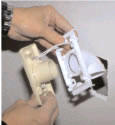
Figure 3 - Installation of inlet valves
The installation of inlet valves is not complicated, as shown in Figure 3.
Determine the location for the power/canister unit. Remember that access is needed to empty the canister. Because central vacuum systems have more power than a canister or upright vacuum a separate electrical circuit is recommended (check the power rating of the unit you are purchasing to determine voltage and current requirements).
Then run PVC pipe and low voltage wiring through the basement, attic or crawlspace, as shown in Figure 4, from each inlet valve to the power unit. (In multi-story homes, piping may be run to upper levels through the backs of closets, under stairways, beside soil pipes.) There's little or no damage to walls and practically no mess.