
Ceiling fans can be a welcomed relief to high temperatures and poor home air circulation, They are relatively easy to install and are a home improvement that almost any diy home handyman is capable of accomplishing.
Wiring diagrams for a variety of ceiling fan circuit configurations are available.
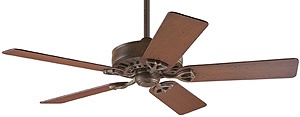
Figure 1 - 5 blade ceiling fan
It is important that the ceiling fan chosen is suitable in size (fan blade length) for the square footage of the room.
A ceiling fan that is to small won't provide the required air circulation and a ceiling fan that is to big will create to much air turbulence and make being in the room uncomfortable.
Sizing A Fan To A Room:
Manufacturers make ceiling fans ranging in size from 36″ to 60Prime; measured from blade tip to blade tip. For maximum performance and efficiency.
Table 1 is a recommended chart of fan size to room size matches:
Table 1 |
||
Room Size |
Square Footage |
Blade Size |
10' × 10' |
100 |
36″ |
12' × 12' |
144 |
42″ |
15' × 15' |
225 |
44″ to 48″ |
20' × 20' |
400 |
52″ to 54″ |
22' × 22' |
485 |
56″ |
25' × 25' |
625 |
60″ |
Mounting Systems:
Ceiling fans can be mounted in 3 positions:
- Flush to ceiling
- Standard mounting on an extension rod
- Angle mounting for vaulted ceilings
Extension Rods For High Ceilings:
Ideally, fan blades should be 7 to 8 feet from the floor for maximum cooling. For ceilings 9 feet tall or taller, use an extension rod to bring the fan down to the proper height above the floor.
Ceilings taller than 9 feet will require a ceiling fan extension rod. For example, a 14 foot ceiling would require a five foot extension rod to position the blades 8 feet above the floor, since you need to allow one foot for the space from the top of the motor to the bottom of the switch housing.
Ceiling Fan Extension Rods |
|||||||
Ceiling Height |
9' |
10' |
11' |
12' |
13' |
14' |
16' |
Extension Rod Length |
12″ |
18″ |
24″ |
36″ |
48″ |
60″ |
72″ |