
Air leakage in the home can be described as leaving the water running in a bathtub. When heating or cooling your home air leakage wastes enormous amounts of energy.
Air Leakage Remediation
The good news is that sealing a home can be accomplished by a home handy person without the need to employee a contractor. All that is necessary to do a job that will make a dramatic difference to your energy bills and comfort is some patience and performing some tasks properly without attempting to cut corners. The most difficult part of the exercise is that you might find yourself working in awkward or uncomfortable situations.
If you follow these techniques you will have gone along way in sealing your home from air leakage.
Where To Start?
The first considerations, before you start sealing your home are the health and safety of you and your family. By sealing the home you may detrimentally affect its ability to function properly. The following items must be investigated before starting your air leakage remediation.
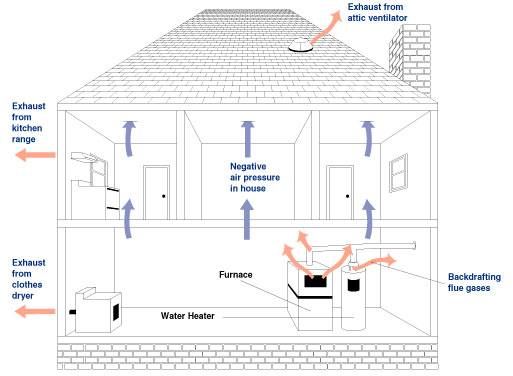
Figure 1: Exhaust appliances upstairs can impede the proper venting of fuel burning appliances in the basement.
- Appliances that have internal combustion - Some appliances that utilize internal combustion depend on air coming into the home in order to vent product of combustion gases up through a chimney, exiting the home. Appliances such as furnaces, boilers, gas water heaters and fireplaces all require fresh air to work properly. These types of appliances are termed
natural draft
oratmospheric vented
and always vent into a vertical flue. They rely on the fact that they have a draft hood which provides indoor air into the system to ensure that the gases are expelled completely and efficiently (Figure 1).
When none combustion appliances that are exhausting air are running simultaneously with the internal combustion appliances, they could starve the internal combustion appliances of the exhaust air necessary to ensure that all gases are expelled up the chimney flue.
If you do not compensate for these situations, stopping air from entering your home could exasperate the air problem by having the gases created as a product of combustion remain in the home rather than being expelled. Most of these gases are toxic!
Note: If your home contains natural draft
or atmospheric vented
appliance you must ensure that sealing the home will not affect their proper and safe operation.
You can perform a test, see Figure 2, to determine what effect, if any, sealing your home will have on internal combustion appliances.
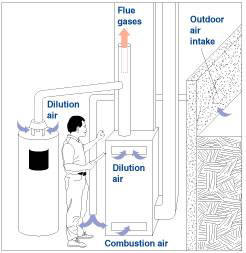
Figure 2: Simple Back Draft test
- Shut all exterior doors and windows in your home.
- Turn on all appliances that have exhaust systems including:
- Bath fans,
- Clothes dryers,
- Powered attic fans,
- Central vacuum cleaners,
- Stove hoods,
- Fans on fireplace inserts,
- Window and wall air conditioners.
- Turn your furnace on by using the thermostat.
- If you have a gas fired hot water tank, turn on the hot water in the bathtub.
- Carefully using a lit cigarette or smoke stick, check on the air movement of exhaust gases to ensure that they are flowing, without hindrance, into their associated chimney.
If the gases are not flowing freely you currently have an unsafe exhaust gas situation in your home and you should not attempt any additional air sealing remediation until the current situation is cured.