
Adding insulation to an exterior wall, as shown in Figure 1, is one of the wisest home improvements that you can undertake. Insulation not only provides a return on the investment but makes your home much more comfortable for your family and reduces drafts and illness.
For existing walls, it may be best to have an insulation contractor add loose-fill blown insulation rather than take the wall apart and rebuild.
If your project is a new home, or a remodeling addition, you have a big opportunity to save energy by filling the new exterior walls with insulation, and adding sheathing to the outside with rigid foam insulation.
Your exterior walls will be comprised of either 2″ × 6″ or 2″ × 4″ studs. 2″ × 6″ stud walls allow for more insulation because of their extra depth. Depending on local codes or your desired R-value for the wall, you may use 5 1/2 inch thick R-21. R-19 fiberglass batt insulation (6 1/4 inch thick) can also be used. Compressing it into a 2″ × 6″ cavity will lower the R-value to R-18. For 2″ × 4″ stud walls, the choices are R-15 or R-13, both of which are 3-1/2 inches thick.
Note: Most of the insulation property comes from the air trapped between the fiberglass fibers, not the fiberglass itself. Because of this, squeezing a larger amount of insulation into a small cavity does not increase the amount of insulation (the R-value). In fact the tighter you compress the insulation the lower the R-value.
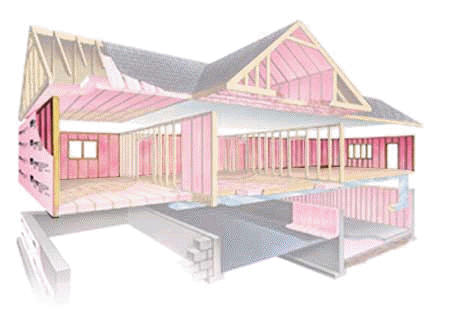
Figure 1 - Exterior wall insulation
- For standard wall heights, use pre-cut batts rather than continuous rolls. Each piece of insulation is manufactured to the size of the most typical framing, which usually is built either 16 or 24 inches on center and about 92 inches high. These cut-to-size batts will make the job go faster and easier.
- The insulation should fit snug against the studs and completely fill the cavity to the top and bottom plates. Cut batt insulation to fit snugly around obstructions such as electrical boxes, plumbing and plumbing vent lines.
- When using kraft-faced batts with flanges, staple the flanges every 8 - 12 inches. The flanges can be stapled to the front or inside of the stud. Drywall installers prefer the facing to be stapled on the inside of the studs.
Note: Never leave faced insulation exposed. The facings on Kraft-and-foil-faced insulation will burn and must be installed in substantial contact with an approved ceiling, wall or construction material to help prevent the spread of fire in the wall, ceiling or floor cavities. Unfaced fiberglass is non-combustible.
Other exterior wall insulation techniques include loose fill fiberglass and dense-pack cellulose.