
Potholes are a common occurrence in asphalt covered roads, in any area that is subjected to inclement winter weather. But, potholes can also occur in residential asphalt driveways (Figure 1), walkways and sidewalks.
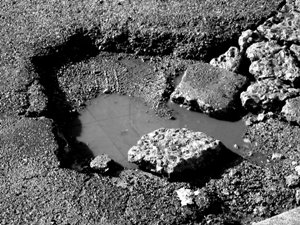
Figure 1 - Pothole in asphalt driveway
In order to protect your asphalt driveway or walkway from potholes, it is important to understand why they occur in the first place.
Small cracks form in the asphalt. This is due to normal contraction and expansion of the asphalt material through seasonal temperature changes as well as the shifting of the earth foundation layer beneath the asphalt surface.
These cracks can be seen in driveways in Figure 2 and 3 and a walkway in Figure 4.
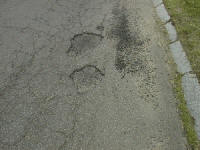
Figure 2 - Cracks & potholes in asphalt driveway
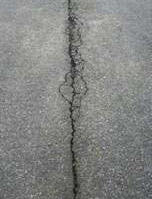
Figure 3 - Longitudinal crack in asphalt driveway
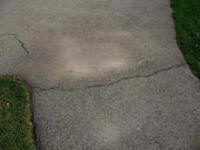
Figure 4 - Crack in asphalt walkway
Once there is a crack in the surface of the asphalt rain can and will penetrate it and form a small pool of water beneath the asphalt layer, as shown in Figure 5 or permeate the foundation the earth layer below the crack.

Figure 5 - Pool of water formed beneath asphalt surface layer
The water then freezes and when water freezes it expands causing the asphalt surface layer to push upwards, as shown in Figure 6, almost like a mini-volcano with magma trying to escape.

Figure 6 - Water freezes below asphalt, which forces the asphalt to rise
Warmer weather then allows the water to melt, leaving an area void of any material below the surface of the asphalt, as shown in Figure 7.

Figure 7 - Void below asphalt surface
Once a void is created, any pressure on the asphalt surface above the void causes the asphalt material to fill the space, as shown in Figure 8 and a pothole is created.

Figure 8 - Asphalt has fallen into the void
One can see from the aforementioned the importance of having a proper foundation for the asphalt paving. If the a proper bed is not provided for the asphalt cracks will form due to the bed settling and shifting.
Additional information on installing an asphalt driveway.