
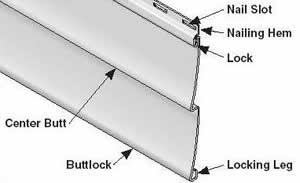
Figure 1 - Siding panel nominclature
Backerboard
The material that is nailed to the studs on the exterior side of the wall, providing a surface area to fasten the siding and trim.
Buttlock
The piece of siding located on the opposite side to the fastening strip, which locks into the preceding piece of siding or trim.
Center Butt
The bend in the center of a piece of siding that makes the siding appear to be two pieces instead of one.
Channel
The location on a piece of trim or post such as an inside or outside corner or a J or F Channel that is designed to accept the insertion of a piece of siding.
Course
A single row of siding that runs from one outside edge to the opposite edge. In vertical panels, it is a single panel running from the highest point of the area to be sided to the lowest point
Crimp
If the fastening portion of a piece of siding has been trimmed away due to size, it is necessary to form crimps on the remaining piece of panel in order for the panel to fit tightly into the slot in the trim. Crimps are formed using a special tool called a snaplock punch.
Drip Cap
A piece of trim used to deflect water away from the top of vertical siding, to prevent water from getting in behind the siding. In some instances a drip cap may be used over windows and doors to deflect water run-off.
F-Channel
The F-channel is a piece of trim that is designed to take a piece of siding at a 90 degree angle to the fastening structure.
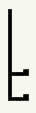
Face
The side of a siding panel that is viewed after installation.
Face Nailing
The nailing of siding through the visible portion of the panel instead of the nailing strip. This is not recommended.
Fascia Board
The material that covers the end of the roof rafters and provides the finished appearance to the edge of the roof.
Finishing Trim
Trim pieces used to provide an aesthetic finished edge to a siding panel or soffit panel.
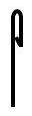
Flange
The area on a siding panel or piece of trim where the fastening holes are located.
Flashing
A piece of material used to deflect water so that it cannot get in behind siding material or trim pieces and damage the backerboard or other structural components of the home.
Furring Strip
A piece of material usually wood, but can be metal, that is placed on the outer surface of the building to provide a surface to fasten the siding too. It is also used to straighten or correct surfaces that are not flat. A common use of a furring strip is to install them over brick, stucco and previously installed siding.
Head Flashing
A piece of trim used to deflect water away from the top of vertical siding, to prevent water from getting in behind the siding. In some instances a head flashing may be used over windows and doors to deflect water run-off.
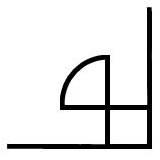
Inside Corner
A trim piece used to mate courses of siding on a 90 degree inside corner.
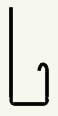
J-Channel
The most common trim piece. It is used around windows, doors, eaves and soffits to provide a grove for the end of a siding panel or soffit panel.
Lap
When a panel or piece of trim overlaps a previous panel or trim, it is considered to be a "lap" joint. The term is derived from the word "overlap".
Lock
That portion of the siding panel that accepts the locking leg from the next course of panels or from the starter strip.
Locking Leg
That portion of the siding panel that slips into the lock from the previous course of panels.
Lug
If the fastening portion of a piece of siding has been trimmed away due to size, it is necessary to form lugs on the remaining piece of panel in order for the panel to fit tightly into the slot in the trim. Lugs are formed using a special tool called a snaplock punch.
Miter
A miter joint is the meeting of two panels, usually at a 90 degree angle where each panel is cut at a 45 degree angle. Soffit material may be installed in this manner to provide a more aesthetically pleasing appearance.
Nailing Hem
The area on a siding panel or piece of trim where the fastening holes are located.
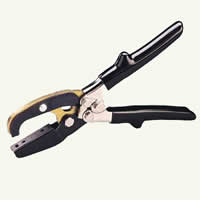
Nail Hole Punch
The "nail hole punch" creates an oval hole in the vinyl siding for nail placement. It is critical in order to allow expansion and contraction of the vinyl siding.
Nail Slot
The slotted hole in the nailing hem or flange that has been created as a position for installing the fastener, nail or staple, into the backerboard.
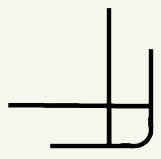
Outside Corner
A trim piece used to mate courses of siding on a 90 degree outside corner.
Plumb
A line that is exactly 90 degrees from a horizontal surface or line is considered to be "plumb". Learn more about plumb, level and square.
Profile
The industry term for the aesthetic appearance of the siding. Learn more about the profiles, styles & textures of siding.
Siding Removal Tool
A tool designed to help remove siding panels without damage to the panel and without causing injury to the installer.
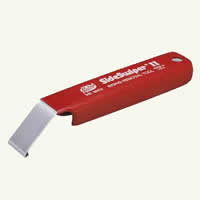
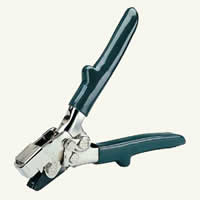
Snaplock Punch
The "snaplock punch" is used to secure the vinyl siding and skirting to finished trim. Tabs grip a greater surface area and guard against dislodging due to relaxation of vinyl from heat and wind.
Scoring
Scratching the surface of a siding panel at a specific point using a utility knife or other sharp tool. The score mark allows the panel to be bent at an exact location and when bent it will snap into two peices leaving clean edges.
Soffit
The soffit is the area below or to the inside (if there is a gable roof) of the rafters that is on the exterior side of the house. The soffit area must be protected from the elements, insects and pests that could enter the home while, in most cases, still providing ventilation.
Strapping
A piece of material usually wood, but can be metal, that is placed on the outer surface of the building to provide a surface to fasten the siding too. It is also used to straighten or correct surfaces that are not flat. A common use of a strapping is to install it over brick, stucco and previously installed siding.
Starter Strip
A horizontal strip, fastened to the lowest point of the siding installation. It is used to connect the first course of siding to the structure.
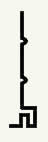
T-Channel
A trim that is used to join the ends of two panels. The most common application is the conversion from horizontal siding on a wall to vertical siding on a roof gable.
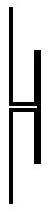
Underlayment
Underlayment is the term used to describe any type of material that is used under the siding, between the exterior wall surface and the back of the panel.
Veneer
All sidings act as a veneer on the outside of a house or other structure. There are dozens of types of sidings and each has it's pros and cons. We have created a veneer comparison chart to help you decide which is the best veneer for your situation.
Ventilated Soffit
Soffit panels that have a series of holes or slits, covered with a screen material that allows air to enter or exit the attic space, while keeping insects and pests out.
Vertical Tongue-and-Grove Siding
Interlocking wood siding that is installed in the vertical plane. Further information for the installation of tongue and grove vertical siding.
Weep Holes
A hole that has been introduced into a siding panel or trim piece to allow water to drain away from the panel.