
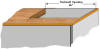
Rabbet
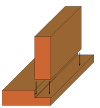
A ledge cut along one edge of a piece of material.
Riser
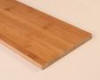
The vertical member of a staircase, located between treads (including the bottom floor).
Round-Top Baluster
Image Not Available
Any baluster that has rounded ends for fitting.
Skirt Board
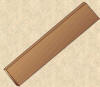
The piece of trim material installed between the stringer and a wall.
Solid Newel
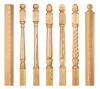
A newel post that is bolted to the house framing.
Spiral Staircase
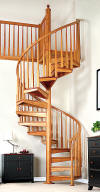
Stairs that rise in a spiral, usually made from manufactured kits. Spiral stairs provide limited access and should never be used as a primary staircase.
Stair Bracket
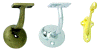
A metal support fastened to the wall that is then attached to the handrail.
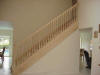
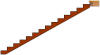
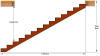
The vertical distance through which stairs must cross from finished floor to finished floor.
The horizontal distance the stairs cover from the face of the top riser to that of the bottom riser.
Tread
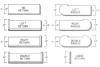
The horizontal member of the stair on which one steps. The nosing is technically part of the tread.
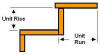
U-Shaped Stairs
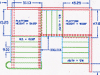
U-Shaped stairs are also know as switchback stairs as they make a 180 degree turn.
Utility Staircase
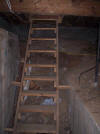
A less frequently used staircase, usually built for access to an attic or basement.
Wall Rail
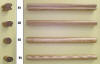
The handrail attached to the wall in an enclosed stairwell.
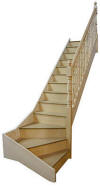
An "L" shaped staircase that uses wedge-shaped treads to make a sweeping 90 degree turn. Occupies less space than a traditional "L" shaped staircase.