
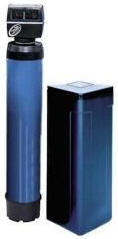
Figure 1 - Water softener
As water flows through underground aquifers it picks up calcium and magnesium minerals, it can also pick-up other contaminants, but no other contaminants will be removed with a water softener. Neither calcium or magnesium have any harmful properties to humans and in some cases are actually beneficial. However, calcium and magnesium minerals create "hard water".
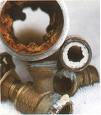
Figure 2 - Pipes and valves clogged with mineral deposits
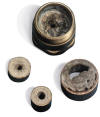
Figure 3 - Faucet aerators clogged with mineral deposits
Hard water has its negatives:
- Hard water interferes with the abilities of soaps and detergents. Soaps and detergents will not dissolve, which, when combined with the calcium and magnesium form a soap scum. The soap scum stays on our skin as a film and will prevent proper cleansing. As well, the soap scum will trap dirt in the fibers that are clothes are woven from and prevent dirt from being removed. It also has the effect of making fabrics rough and stiff. The soap scum or residue will remain on toilets, sinks, tubs and shower walls and on glasses, dishes and pots and pans.
- Appliances that heat water such as kettles and humidifiers will have deposits of calcium and magnesium build-up around heating elements, reducing the life of the appliance.
- Calcium and magnesium deposited on the inner walls of hot water tanks, greatly reducing the life of the hot water tank and over time require more and more energy to heat the water.
- Hot and cold water faucets can have their flow reduced due to the build-up of calcium and magnesium on the walls of valves, pipes and spouts, as shown in Figure 2. Many people can visually see the build-up of calcium and magnesium on the ends of their faucet aerators, as shown in Figure 3, and shower heads.
Before you purchase a water softener you should check the hardness of your water. Inexpensive hard water test kits are available, as shown in Figure 4.
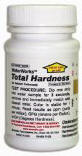
Figure 4 - Hard water test kit
The test kits will measure the hardness of your water in "grains per gallon" (GPG) or in "milligrams per liter" (mg/l). Table 1 provides an indication of the level of hardness of your water based on the outcome of your water hardness tests.
Reading |
Level Of Hardness |
|
GPG |
mg/l |
|
0 to 1 |
0 to 17 |
Soft Water |
1 to 3.5 |
17 to 60 |
Somewhat Hard Water |
3.5 to 7 |
60 to 120 |
Hard Water |
7 to 10.5 |
120 to 180 |
Very Hard Water |
While there are a few different types of water softeners, the most common by far, with a proven technique for removing the problem calcium and magnesium, uses a tank that contains polystyrene plastic beads that attract and hold the calcium and magnesium as water passes through them. The calcium and magnesium are then flushed from the beads using a salt brine solution which is held in a separate tank.
There are a few different mechanisms that are used to flush the built-up calcium and magnesium from the tank. This water softener step is known as a "recharge":
Mechanical Timer:
A mechanical timer that cycles based on a time period since the last flushing. This type of system, which is the least expensive, does not take into account water usage. Hence, you could easily be flushing a tank that is not full. This can be an expensive process both in energy and salt used with each flush. It should be noted that in most cases, while the system is in flush mode, hard water will be delivered to all faucets throughout the home.
Computer Control:
A more sophisticated system utilizes a computer to monitor the amount of water that is flowing through the tank and then flushes the tank based on a preset volume of water consumed. Many of the computer controlled water softeners provide a reserve of polystyrene beads to provide soft water during the flush cycle.
Mechanical Meter:
A mechanical water meter is used on some systems to measure water consumption and flush the tank when water usage has reached a pre-determined amount.
Options with water softener systems include:
- Dual tanks:
- Water softener systems equipped with dual tanks ensure that soft water is always available. These water softener systems only recharge one tank at a time, leaving the other tank available to provide soft water.
- Water Purifiers:
- As stated in the introduction to this page, water softeners are not water purification systems. Some models of water softeners have integral purification systems built into the appliances.
Additional information on water softener installation