
As with any DIY home handyman, home improvement project, proper planning is the key to a successful project. Fences can be made out of pre-formed vinyl or plastic sections, pre-built wood sections (Figure 1), and wrought iron. A fence made out of brick or block is considered a free standing wall and the methodology for construction is not covered within this article.
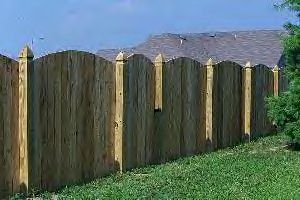
Figure 1 - Wooden fence
The steps involved in building and installing a fence, are basically the same no matter what material is chosen, however, it is important that you know exactly what material you are planning on using before you start.
Once the material is determined, you can create a layout. If you are using pre-fabricated vinyl, plastic or wood sections for your fence, the layout must be well thought out and locations of gates or openings should be considered within the context of the length dimension of the individual sections. It may be necessary to cut a section in order to conform to the dimensions of the area you wish to fence.
You should also check with your local building department to determine if a building permit is required and if there are any by-laws concerning fence height or style. A similar situation exists in managed communities, where community by-laws may be in place defining fence styles and heights.
The first item that should be carefully laid out is your lot line. This invisible line separates your property from your next-door neighbor’s property. If there is any doubt as to where this line is, I strongly recommend having a survey done to determine boundaries.
Once the lot line is determined, put a stake in the four corners of your property and run a string from stake to stake, hence a string line defining your lot line. Remember that this line should not be crossed, hence if you are placing fancy caps or lights on top of posts, the side, or top of that item should be in-line with the lot line.
After determining the location and position of the fence, unless you are 110% positive that there are no buried gas pipes, telephone cable, TV cable, or power lines anywhere in the area, you should call to have the area marked for underground services. Most jurisdictions supply this service free of charge.
Based on the material, style, and construction of your fence you have to determine how the support posts will be mounted and/or installed. There are numerous methods available.
- The most common is digging a hole and inserting a post into the ground.
To provide adequate support for the fence, the post should be set approximately 1/3 of its visible height in the ground, as shown in Figure 2. As an example, if your post needs to stick out of the ground 6 feet, then it should be buried in the ground 2 feet