home improvement

Kitchen Cabinets

Subscribe to our diy, home improvement newsletter.

home improvement diy newsletter

Home

Blog

New Pages

Main Index

New Product Showcase

Gardening

Flooring

Bathroom

Kitchen


Home Improvement Categories

A

Additions

Air Cleaners

Air Conditioning

Air Quality

Appliances

Articles

Asphalt Driveway

Attic


B

Backsplash

Basement

Bathroom

Before & After Pictures

Blinds

Books

Building Permits


C

Cabinets

Calculators

Carpet

Caulking

Ceilings

Concrete

Condensation

Construction

Contractor

Converters

Cork

Counter Tops


D

Decks

Demolition

Design / Layout

Doors

Driveways

Drywall


E

Electricity & Electrical

Environmental

Exterior


F

Fans

Faucets

Fences

Financing

Fireplace

Fixtures

Flooring


G

Gardening

Garage

Glass Blocks


H

Heating

Home Automation

Hot Water Systems

Humidity


I

Insulation


K

Kitchen


L

Laminate Flooring

Landscaping

Lead Based Paint

Lighting

Luxurious Materials


M

Magazines

Mold & Moisture


P

Painting

Patio

Plans - Free

Plumbing

Publications


R

Roofing

Roofs


S

Safety

Security

Sinks

Skylights

Stairs

Steel Studs

Structured Wiring


T

Tile - Flooring

Toilets

Tools


V

Vacuums - Central

Ventilation

Vinyl Flooring


W

Wallpaper

Walls

Window Decor

Windows

Wood Flooring


Exclusive Offer!

kitchen cabinet knife holder

Find a Contractor

Home Design Studio for Mac


Kitchen Cabinets


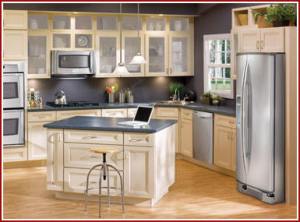
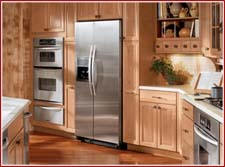
Kitchen cabinetry comes in a vast variety of materials and finishes.  Cabinets can be purchased as a DIY assembly, preassembled (standard sizes) and custom manufactured.


kitchen cabinets 1


GLOSSARY OF KITCHEN CABINET TERMS:

The following is a glossary of terms used to describe the types of cabinet construction.


Traditional Face Frame Style: The cabinet face is constructed of vertical "stiles" and horizontal "rails" that reinforce the cabinet structure and provide mounting support for doors and drawers.


European Frameless Style: The cabinet is constructed without any face framing. Doors and drawers are mounted to the sides of the cabinet. Fully concealed hinges are used for the doors. This type of cabinet is also referred to as "full access" because there is no face frame to restrict access to the cabinet.


Full Overlay: Doors and drawers are sized large enough to cover the cabinet face with only minimal clearances between them.


Full Inset: The doors are fitted into the face frame and are flush with the frame.


Ready-to-Assemble: Factory manufactured and finished cabinet components shipped with all parts, fasteners, and instructions necessary for complete assembly of one cabinet. No power tools should be necessary for assembly.


kitchen cabinets 2

kitchen cabinets 3 kitchen cabinets 4


Cabinet Maintenance:


A.  Understand Your Cabinets

The level of cabinet quality, as in all products, can vary substantially.  Cabinets should be recognized as furniture products installed in "hard-use" room environments and must receive at least equivalent care.
Properly cared for, quality cabinets retain their beauty and function for many years.  Today's cabinets may not only be constructed of solid wood and wood veneers but may also contain a variety of quality engineered products, that are durable, attractive, conserve wood, and meet all safety and health requirements.  

Some frequently used surface materials are:

  • Melamine (Formica-like) - commonly used for countertops but may also be used for other surfaces.

  • Vinyl - may be wood grained or solid colors. May be used for all surfaces except countertops.

  • Paper - chemically and finish-treated for durability. May be wood grained or solid colors and used for all surfaces except countertops.

Commonly used panel core materials are: MDF, lumber, wood veneers, flake or particleboard, hardboard.


B.  At Time of Purchase or Installation of Cabinets - Prepare for Future Maintenance.

Quality products can be damaged or in time need repair, so at the beginning obtain the following items from your cabinet supplier and store them in a permanent location.

  1. Several hinges

  2. Two or three drawer guidance systems

  3. Several pulls

  4. A repair kit, if available from the manufacturer

  5. A small (pint-size) amount of each stain or color coat used for finishing your cabinets (clear top coats are available in aerosol cans from your local store).

  6. The name and address of the cabinet manufacturer and the name of the cabinet style. (You may want to add cabinets or replace a damaged part at some future date).

C.  Some Recommended "Do's & Don'ts"

  1. Don't hang wet towels on door or drawer fronts.

  2. Don't permit children to swing on doors or use drawers as step ladders. Hinges or drawer guidance systems that are bent or twisted likely cannot be repaired like new.

  3. Spills should be cleaned promptly. Most finished surfaces are highly resistant to household foods and liquids, however, prompt cleaning adds assurance.

  4. Most man-made materials, such as countertops, should not be waxed or have commercial polish applied. They are not needed and tend to build undesirable coatings or surfaces. Use warm water with detergent (sparingly) to maintain cleanliness.

  5. Don't place hot pans on countertops.

  6. If at some future date you want to paint or refinish your cabinets-be cautious. Many paints are not compatible with cabinet finishes. Severe surface pealing or blistering of the paint could result.


D.  Repair Tips

  1. There are many adhesives available to repair broken wood parts or loose panel surfaces. Generally, Elmers Glue (or equivalent) or a contact adhesive can manage most repairs, if properly used.

  2. For small loose areas of wood veneer or edges of doors, etc., or at the edge or corner of panels:

Carefully clean all old, dry glue from loose surfaces with a scraper or sand paper.

Apply a thin, uniform coat of Elmer's-type glue to one surface.  Press the loose veneer into place and wipe off the excess glue squeezed out. Using a strung tape as a clamp, tape the loose veneer down as tightly as practical and allow to dry for 24 hours before moving tape.

  1. For a split or broken wood part:

Proceed similarly to repairing wood veneer.

For split wood, work glue into the split as deeply as possible, push tightly together, wipe of squeezed out glue and clamp as tightly as possible with strong tape for 24 hours.  If the damaged location will permit the use of a metal screw or other type clamp, you can rent clamps at most rent-all locations and get a better positive clamping action.  If removable, such as a drawer, clamping in a vice until dry would be excellent.

For a small wood section that is bumped and split completely loose, apply glue to the loose part and carefully tape it to its original position until dry.

  1. For small, loose areas of man-made material surfaces, veneers, on edges or panel corners:

Clean as in 2 above

Apply contact adhesive according to the manufacturer's instructions on the container and place the loose section firmly in place.

  1. For a stripped screw in a door hinge:

Remove the screw and clean dust or chips from the hole. Cut wood match sticks to the approximate hole depth. Apply glue to the match sticks and in the hole. Light hammer tape the match sticks into the hole, filling the hole tightly and allow to dry for 24 hours.  After drying, trim the match sticks to be flush to the surface. Carefully re-drill the screw hole using a drill bit approximately the root diameter (screw base diameter not counting threads) of the screw. The same screw may then be applied, however, a sheet metal screw (local hardware) of the same size will provide better holding power, particularly for repair purposes.

  1. Should a machine screw (or bolt) holding a door or drawer pull no longer  hold (stripped threads), place a small amount of steel wood around the threads and screw carefully into place without heavy pressure. It may hold.

  2. Generally - never use nails or repair. They often split or shatter the wood or particleboard core doing more damage.

  3. Never drive a screw into any part or wall without first pre-drilling to the root diameter of the screw.

  4. Cabinets or heavy objects screwed to wall panels will not hold satisfactorily. They must be screwed properly to structural studs.

  5. Should a pull become broken, or hinge or drawer guidance system break or not operate properly, replace them from your permanent storage.

E.  Finish Repair

CAUTION - ALL FINISHING MATERIALS MAY BE HIGHLY FLAMMABLE!

  1. Proper finish repair can be rather highly skilled procedure, particularly since several types of finishing materials including man-made materials, may have been used on your cabinets. However, you have three possible sources of correct repair material.

  • A repair kit from your cabinet manufacturer or supplier.

  • Small cans of color coats from your supplier.

  • Felt tipped pens or finish and/or putty sticks in a wide variety of colors from your hardware or home supply store.

  • Aerosol cans of clear, final top coat spray can be purchased at your hardware or home supply store.

  1. Sprayed-on type standard finishes, which are scratched or lightly dented, can be repaired with these materials. For the inexperienced, practice on a small board or 2x4. Colored putty sticks fill dents with a putty knife. Apply color coats of finish lightly since you can apply more coats to darken to match. Once too dark, colors cannot be easily lightened. Protective top coats are sprayed on last-use according to aerosol can instructions. Practice first, then you may have to "mask" other surfaces to avoid overspray. Be cautious, the sheen or brightness of the topcoat material, when thoroughly dry, may not match your cabinet.

  2. Countertop surfaces of decorative laminate are very tough and if dented or broken, can rarely be repaired satisfactorily. Don't misuse them!

  1. If you have considerable touch-up and/or finish repair needed, perhaps you should have an expert. He can do a better job if you have in hand the recommended matching materials. Proper finish repair can be rather highly skilled procedure, particularly since several types of finishing materials including man-made materials, may have been used on your cabinets. However, you have three possible sources of correct repair material.


Manufacturers, Retailers, Dealers - Advertise on this page!


Contact


cabinet, door, drawer, cupboard

copyright 2006/8 - all rights reserved

kitchen cabinets